
Managed Security Services: Advantages and deployment scenarios for companies
Managed security services: Benefits and deployment scenarios for companies
In today's digital world, companies are faced with a growing number of cyber threats and security risks. Expertise, resources and continuous monitoring are needed to ensure a robust IT security strategy. This is where Managed Security Services (MSS) come in.
In this blog post, we will highlight the benefits of MSS for organisations and when companies should consider using Managed Security Services.
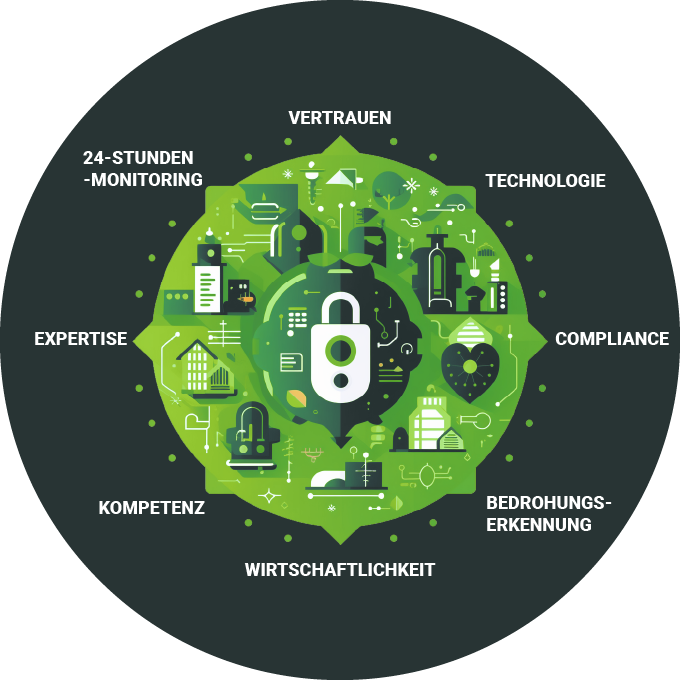
MSS as an answer to internal skills and personnel shortages
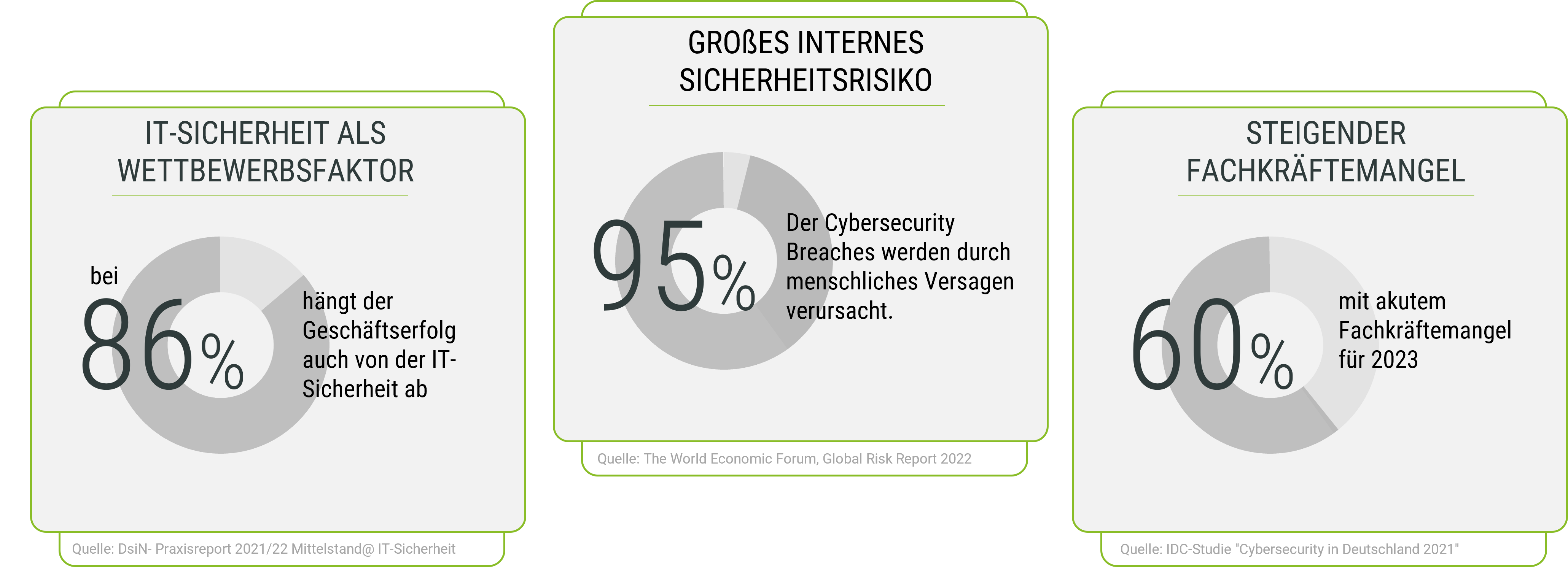
Effective IT security poses challenges for many companies. Small and medium-sized companies in particular often do not have sufficient internal security resources. This applies to specialised employees as well as know-how and financial resources. This can lead to significant risks as companies are exposed to the ever-growing and changing threats of today's cyber world.
Managed Security Service Providers (MSSP) have highly qualified security experts who have up-to-date knowledge and extensive experience in the field of cyber security. With the help of MSS, companies can access expertise without having to allocate internal resources to build and train their own security team.
Using Managed Security Services (MSS) is a solution for companies to supplement their limited internal security resources and strengthen their security posture. Below are some key aspects that illustrate the benefits of Managed Security Services in relation to limited internal security resources:
Access to specialist knowledge and expertise: MSS providers have highly qualified security experts who have extensive experience and expertise in the field of cyber security. These experts are familiar with the latest threats, technology trends and security best practices. By working with an MSS provider, companies gain access to this expertise, which helps them to identify security gaps, implement appropriate protective measures and proactively respond to new threats.
Resource-saving solution: Hiring and maintaining an internal security team can be a significant financial burden for a company. This includes the recruitment and training of skilled staff, the purchase of security technology and the ongoing costs of salaries and training for team members. By utilising MSS, companies can reduce these costs as they can draw on the existing resources of the MSS provider. This means they do not have to invest in expensive internal infrastructure and personnel.
Scalability and flexibility: MSS providers offer scalable solutions that can be adapted to individual company needs and requirements. Companies have the option of scaling security services depending on their current situation and growth plans. Additional resources and services can be adapted to new requirements and threats as needed. This flexibility allows companies to flexibly adapt their security resources while maintaining a high level of protection.
Focus on core business: By outsourcing security responsibilities to an MSS provider, companies can focus on their core business without having to deal with the complex tasks of security monitoring and management. This allows internal teams to focus their resources and energy on other activities, increasing business efficiency and productivity.
Increase efficiency and reduce costs with MSS
By working with an MSSP, organisations can reduce the cost of implementing a comprehensive security infrastructure while focusing their own resources on more strategic business areas.
Here are some important factors that contribute to reducing the operating costs of MSS:
Reduced operating costs: Investments in hardware and software, including firewalls, intrusion detection and prevention systems (IDPS), anti-virus software, etc., can be considerable. Companies can access and use the MSS provider's existing resources without having to make expensive investments.
Scalable cost structure: MSS providers usually offer flexible billing models that allow companies to adjust their security spending according to their specific requirements. Companies only pay for the services they actually use and can add additional resources or reduce unneeded services as required.
Competence and effectiveness: MSS providers have highly qualified security experts who have a wide range of expertise and experience in the field of cyber security. This saves companies the potentially costly hiring and training of in-house security staff.
Current technologies and tools: MSSPs are constantly informed about the latest security technologies and threat landscapes. They can use the latest tools and technologies to protect organisations from new and evolving threats. This ensures that organisations always benefit from the best security solutions without having to invest in constantly updating their technologies themselves.
Security never sleeps: 24-hour monitoring by MSS
Cyber criminals search around the clock for vulnerabilities to penetrate networks. Managed security services offer companies 24-hour monitoring by specialised security teams. These teams use state-of-the-art monitoring technologies and tools to monitor a company's entire IT infrastructure. This includes networks, systems, applications and end devices.
The 24h monitoring covers various areas:
Real-time monitoring: MSS providers use SIEM (Security Information and Event Management) systems to record and analyse security events in real time. The continuous monitoring of log files, network traffic and other security data makes it possible to detect potential attacks and respond to them at an early stage.
Event correlation: An important feature of 24-hour monitoring is the ability to correlate different security events with each other. This makes it possible to recognise potential threats that may span multiple systems or events. By analysing event correlations, MSS teams can identify complex attacks or ongoing security breaches and take appropriate countermeasures.
Alerting and response: When a potential threat is detected, MSS providers immediately generate alerts or notifications to inform the company of the security incident. This enables a rapid response and the initiation of measures to contain the attack. The MSS teams are in close contact with the company and work together to minimise the impact of the incident and protect the affected systems.
Incident Response: In the event of a security incident, the 24-hour monitoring of the MSS providers also offers comprehensive incident response services. The MSS team supports the company in analysing the incident, eliminating the threat, restoring the systems and implementing measures to prevent such incidents in the future. The speed of response and expertise of the MSS teams help to minimise the impact of security incidents and maintain business operations.
Matching security and compliance with MSS
Compliance with IT security rules and regulations is critical for organisations. Many industries and countries have introduced specific regulations and data protection laws. These are designed to ensure the protection of personal data, the confidentiality of information and the integrity of IT systems. Legal consequences, financial losses and reputational risks can result if these regulations are not complied with.
Managed Security Services (MSS) support companies in complying with legal requirements. Here are some important aspects that illustrate the benefits of MSS in terms of compliance:
Eexpertise in regulations and compliance: MSS providers are familiar with the applicable rules and regulations in the area of IT security. They have the necessary expertise to support companies in the interpretation and implementation of these rules and regulations. By working with an MSS provider, companies can ensure that their security practices comply with applicable regulations and that the necessary measures are taken to protect their data and systems.
Assessment and risk management: MSS providers regularly conduct security and risk assessments to identify potential vulnerabilities and risks. With the help of these assessments, companies can recognise their security gaps and take appropriate steps. By identifying and responding to risks early on, companies can avoid compliance breaches and improve their security posture.
Continuous monitoring and reporting: Continuous monitoring can be used to detect potential compliance breaches and take countermeasures. MSS providers create regular reports and logs. These help companies to document their security measures and compliance with legal regulations. These reports can be used to prove compliance with legal requirements during audits and compliance checks.
Support with legal requirements: In the event of a security incident or a breach of legal regulations, MSS providers can support companies in investigating incidents, securing evidence and reporting incidents. In addition, they can help minimise the impact of an incident and manage potential legal consequences when working with authorities and legal bodies.
MSS and the growing threat landscape: A Safe Haven in an Insecure World
Today's threat landscape is constantly evolving and becoming more complex by the day. Companies are exposed to a variety of threats. These range from cyberattacks, malware infections and phishing attacks to ransomware, targeted attacks and internal threats. These threats can seriously affect a company's security, reputation and financial stability.
The advantages of MSS with regard to the threat situation can be summarised as follows
Cybersecurity expertise: MSS providers have highly qualified security experts with extensive expertise and experience in the fight against cyber threats. They are familiar with the latest attack methods, tools and techniques and are able to support companies in developing a comprehensive security strategy. The expertise of MSS providers enables companies to stay on top of the latest threat landscape and protect their systems and data.
Modern security technologies: To address evolving threats, MSS providers are continuously investing in advanced security technologies and tools. They use innovative solutions such as intrusion detection and prevention systems (IDPS), firewalls, antivirus software, security information and event management (SIEM), etc. to strengthen organisations' security infrastructure. These technologies enable them to detect threats early, ward off attacks and close security gaps.
Updating and patch management: The threat landscape is constantly changing and new security gaps and vulnerabilities are constantly being discovered. MSS providers keep security systems up to date by regularly applying updates, patches and security updates. This reduces the potential gateways for attackers and increases the security of the company's systems. Regular update and patch management by MSS providers relieves companies of this time-consuming task and ensures that the protection of company systems is continuously guaranteed.
Conclusion
The use of managed security services offers companies numerous advantages, including expertise, 24-hour monitoring, cost efficiency and access to the latest technologies. Organisations should consider using MSS if they need in-house expertise and resources to enhance their security strategy. In addition, MSS are suitable for meeting compliance requirements and ensuring protection against an ever-evolving threat landscape.
Working with a trusted MSSP is critical to maximising the benefits of managed security services and achieving the organisation's security goals. By working with MSS providers, organisations can drive their core business forward while ensuring effective protection of their IT infrastructure.